
Gritty goals help elementary students connect something they care about with a plan they can keep working on. Instead of stopping at “I want to get better at math,” students choose a specific next step, practice it, and reflect on what to try when they get stuck.
If you’re wondering how to develop grit in students, start with a goal small enough to practice in your classroom. These six goal-setting steps combine planning, perseverance, and reflection, with reading, math, and writing examples you can adapt for your learners.
What Are Gritty Goals?
A gritty goal is a meaningful challenge that takes sustained effort. For elementary students, the big goal might be becoming a more confident reader, writing stories for other people to enjoy, or learning a difficult skill. Short-term goals give children a way to practice toward that larger purpose.
In my classroom, I explain it like this: If a SMART goal is the vehicle that gets you there, grit is the engine. SMART stands for Specific, Measurable, Achievable, Relevant, and Time-bound. A SMART goal describes the plan; grit helps students return to it, use feedback, and try another approach.
Take my grandson, Mills. He’s convinced he’ll be a pro athlete. Since he was six, I’ve watched him throwing balls against rebounders, hitting off tees, and navigating kid-pitch baseball. His big dream gives meaning to those small practice sessions. That’s the connection we want children to make with their own learning.
Grit doesn’t mean struggling alone or refusing to change a goal. Students also need instruction, encouragement, suitable materials, and time to rest. Asking for help and revising a plan are useful learning strategies.
1. Choose a Goal That Matters to the Student
I remember starting the school year with a goal-setting worksheet and thinking I had it figured out. Students wrote things such as “I want to be better at math” or “I want to read more.” But writing down a wish didn’t give them a plan for following through.
Begin with a short conversation before you hand out the planning sheet. Ask: “What would you like to be able to do?” and “Why does that matter to you?” Help children choose one goal connected to an interest or a real classroom need.
Try this activity: Have students divide a page into “Things I enjoy” and “Things I want to learn.” Let them draw or write their ideas, then circle one they would like to work on. A child who loves animals might choose to read an animal book and explain three things they learned.
Let students help choose the goal. A goal that matters to the child gives you something concrete to return to when the work becomes difficult.
2. Turn the Wish Into a SMART Goal
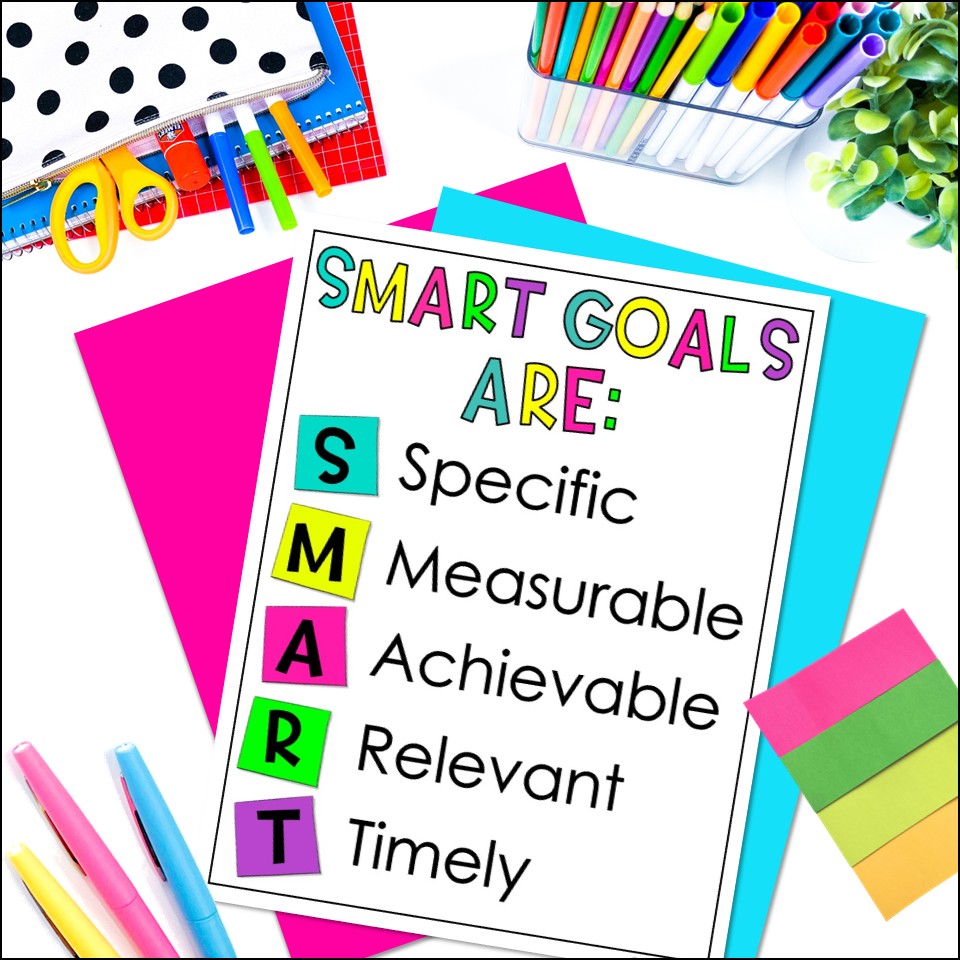
Model the difference between a broad wish and an action a student can actually take. “I want to be a better writer” is a starting point. “Over the next two weeks, I will add a clear beginning, middle, and ending to one story” gives the child a task and a way to review progress.
- Specific: What will I work on?
- Measurable: What work or evidence will show my progress?
- Achievable: Is this a reasonable challenge with the support I have?
- Relevant: How does it connect to something important to me?
- Time-bound: When will I check how I’m doing?
Try this activity: Write a vague goal on the board and revise it together. Then invite partners to check whether each other’s goals explain what to do and when to review it. Keep the target appropriate for the student’s starting point; everyone does not need the same goal.
3. Break the Big Goal Into Small Steps
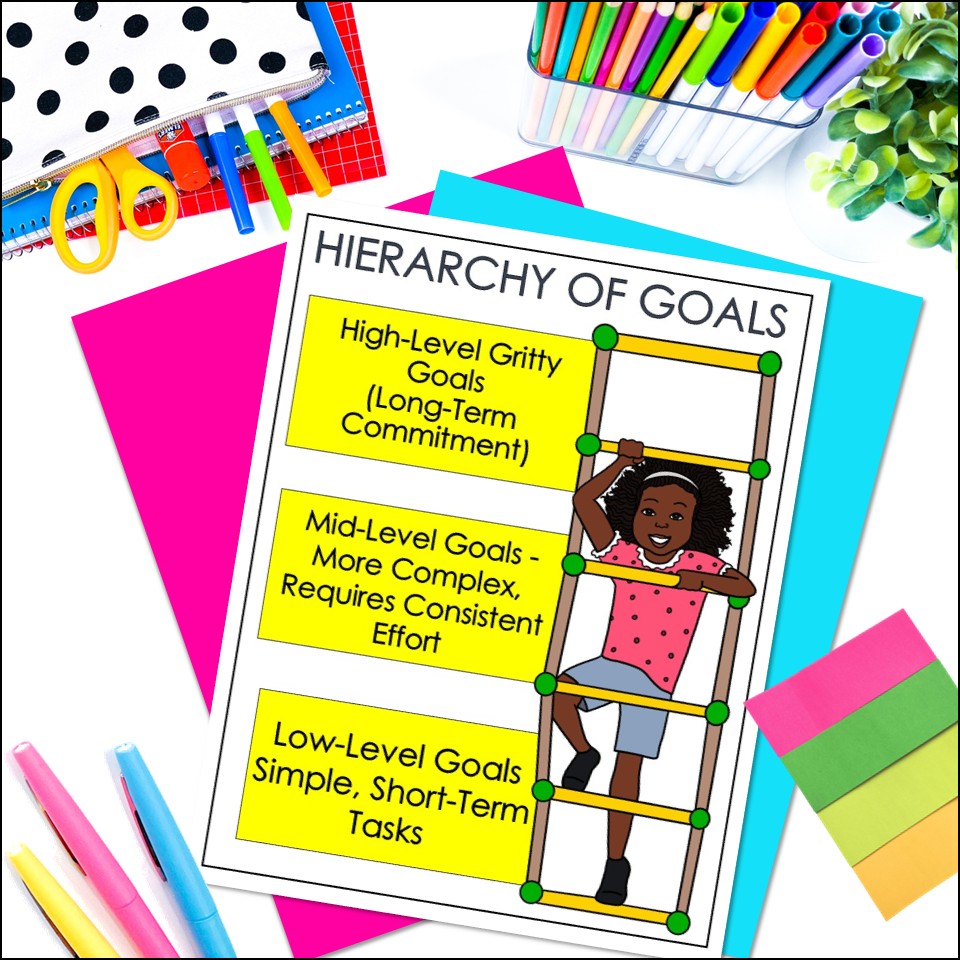
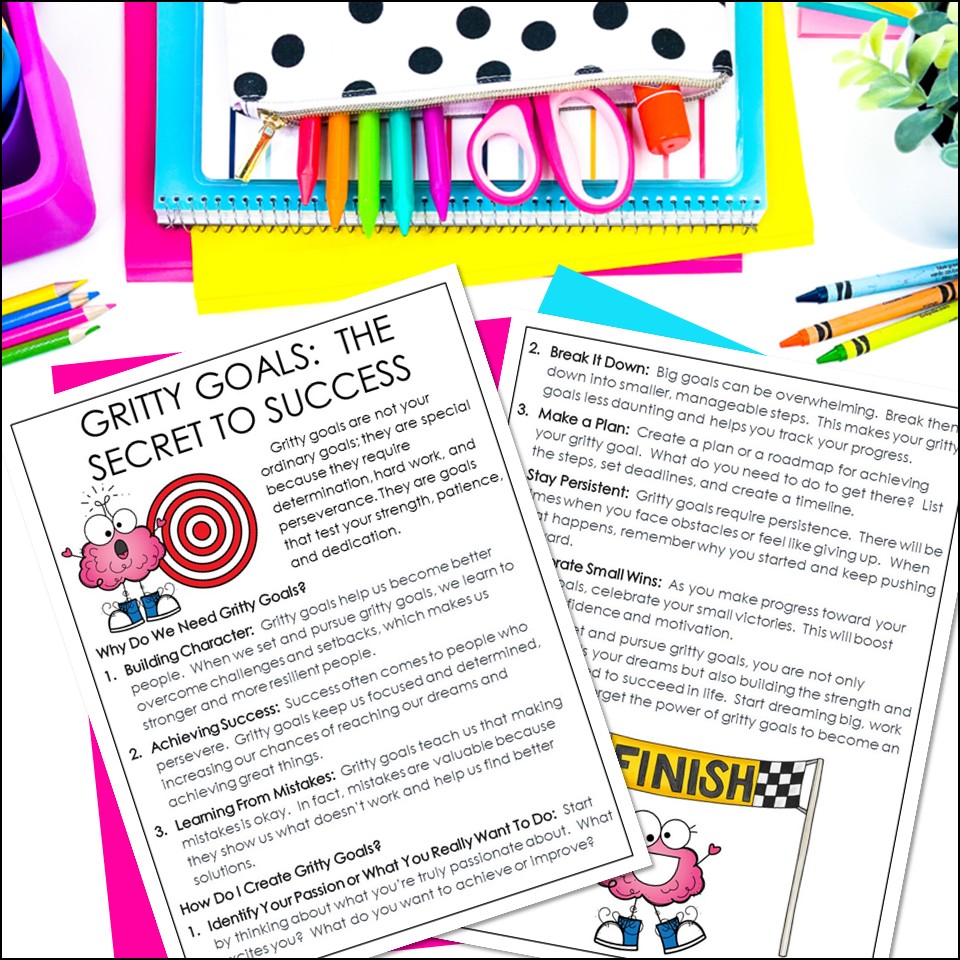
Angela Duckworth’s idea of a goal hierarchy is a helpful way to show how everyday actions connect to a larger purpose. I introduce three levels: a big goal at the top, a smaller milestone in the middle, and a daily action at the bottom.
- Big goal: Become a reader who enjoys and understands chapter books.
- Milestone: Finish one suitable book and talk about its main events.
- Daily action: Read for ten minutes during independent reading and jot down one important event.
We visualize this structure using the Goals Pyramid from my Creating SMART Gritty Goals unit. Students can see that a big goal is supported by smaller, manageable choices.
Try this activity: Draw a three-level pyramid together. Ask students to place their goal at the top, identify a milestone, and write one action at the bottom that they can begin today. Check that the action genuinely supports the goal.
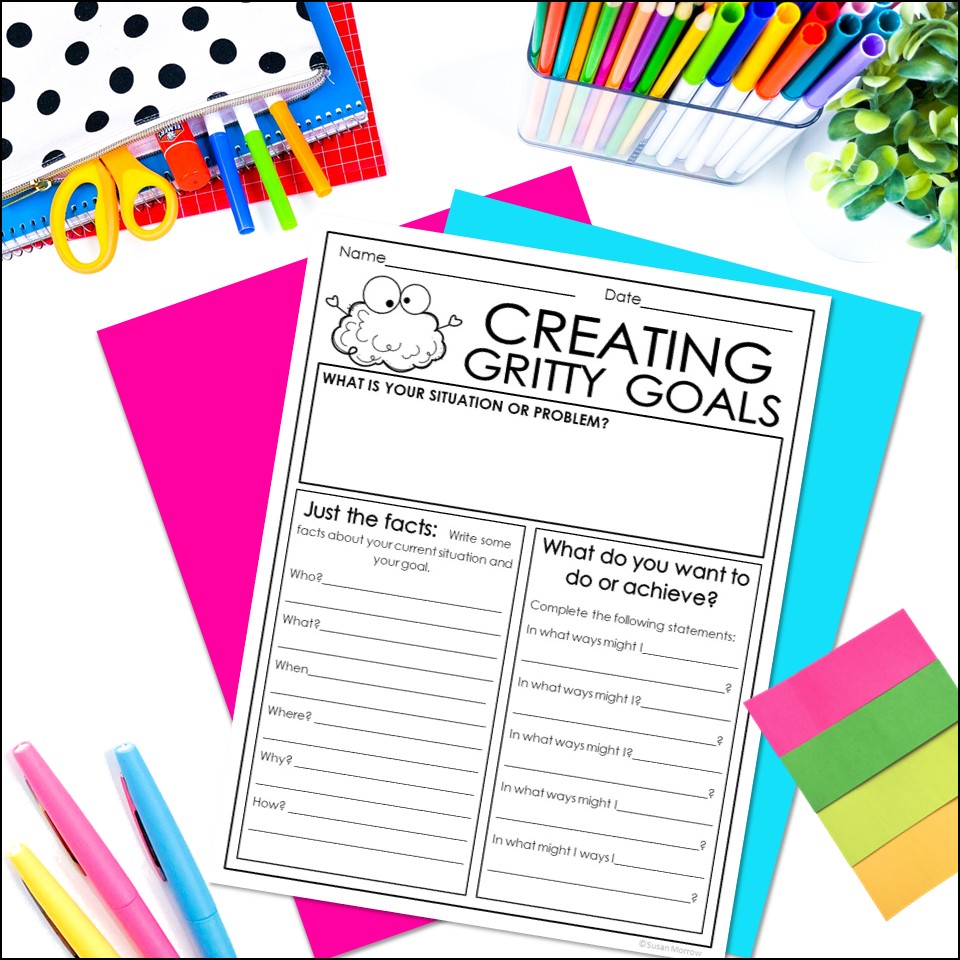
4. Plan What to Do When the Work Gets Hard
A useful goal-setting lesson includes the moments when things don’t go as planned. Before students begin, ask them to name one likely obstacle and choose a response. That makes “keep trying” much more practical.
- “If I don’t understand a word, I will use a strategy we have practiced and ask for help if I still need it.”
- “If my math answer doesn’t make sense, I will draw a model and explain my thinking.”
- “If I get frustrated with my story, I will take a short break and return to one sentence I can improve.”
Try this activity: Give students an “If I get stuck, then I can…” sentence starter. Practice one response together, such as asking a specific question or trying a different tool. For more ideas, see my activities for teaching perseverance in the classroom.
This is also a natural place to model growth mindset language. “I can’t do this yet” is most useful when it leads to a next step: “I’ll try a model,” “I’ll practice one part,” or “I’ll ask my teacher.”
5. Track Progress With a Quick Weekly Check-In
A goal needs a regular place in the classroom routine. Set aside a few minutes each week for students to look at their practice, a work sample, or a simple tracker. A check mark shows that they practiced; their work helps show what they are learning.
- What did I try this week?
- What is getting easier? What evidence can I show?
- Where did I get stuck?
- What will I try next, and what help do I need?
Try this activity: Use a weekly goal log with three boxes: “My action,” “What happened,” and “My next step.” Let younger students draw their response or explain it to an adult. Older students can compare an earlier work sample with a new one.
Keep check-ins focused on the individual learner’s progress. Students don’t need to compete over who reads the most pages or finishes first. Notice the useful strategy, thoughtful revision, or willingness to ask for help.
6. Reflect, Adjust, and Celebrate Growth
At the review date, look at the goal together. Was the challenge appropriate? Did the student have time and support to practice? Did the chosen strategy help? A missed goal is information you can use to plan the next step.
Sometimes a goal needs to be broken into smaller pieces or given more time. If a child planned to read five books and is struggling to finish one, look at book difficulty, available reading time, and the help they need before deciding what to change.
Try this activity: Invite students to finish these prompts: “I’m proud that I…,” “One thing I learned was…,” and “Next time I will….” Celebrate progress with a specific observation: “You used feedback to make your ending clearer.”
For a follow-up discussion, use these ways to help students learn from mistakes. The goal is to help children understand their learning, not to label them as gritty or not gritty.
Three Gritty Goal Examples for Elementary Students
Use these as starting points, then adjust the task, timeline, and support for each learner. The important connection is between the larger purpose, a manageable goal, and a regular action.
Reading Goal: Understand and Share a Book
Larger purpose: Become a more confident reader. Two-week goal: Read a teacher-approved book and retell its beginning, middle, and ending. Practice: Read for ten minutes during classroom reading time and make a quick note or drawing. Check: Use those notes to retell the story to a partner or teacher.
Math Goal: Explain a Problem-Solving Strategy
Larger purpose: Become a more confident problem solver. Two-week goal: Solve and explain four of five addition word problems using drawings or another taught strategy. Practice: Work through one suitable problem each day with feedback. Check: Review the work for both the answer and the explanation, then choose what to practice next.
Writing Goal: Revise a Complete Story
Larger purpose: Write stories other people can follow. Two-week goal: Draft and revise one story with a clear beginning, middle, and ending. Practice: Spend a short writing session on one part at a time. Check: Ask a partner to retell the events and use their feedback to clarify a confusing part.
Picture Books That Start Conversations About Grit
Read-alouds give students a shared example before they talk about their own challenges. Pause to ask: “What does the character want?” “What gets in the way?” and “What changes when the character tries again or accepts help?”
- The Most Magnificent Thing by Ashley Spires: Discuss frustration, taking a break, and returning to a project with a fresh perspective.
- Rosie Revere, Engineer by Andrea Beaty: Talk about what a failed attempt can teach someone who is designing and building.
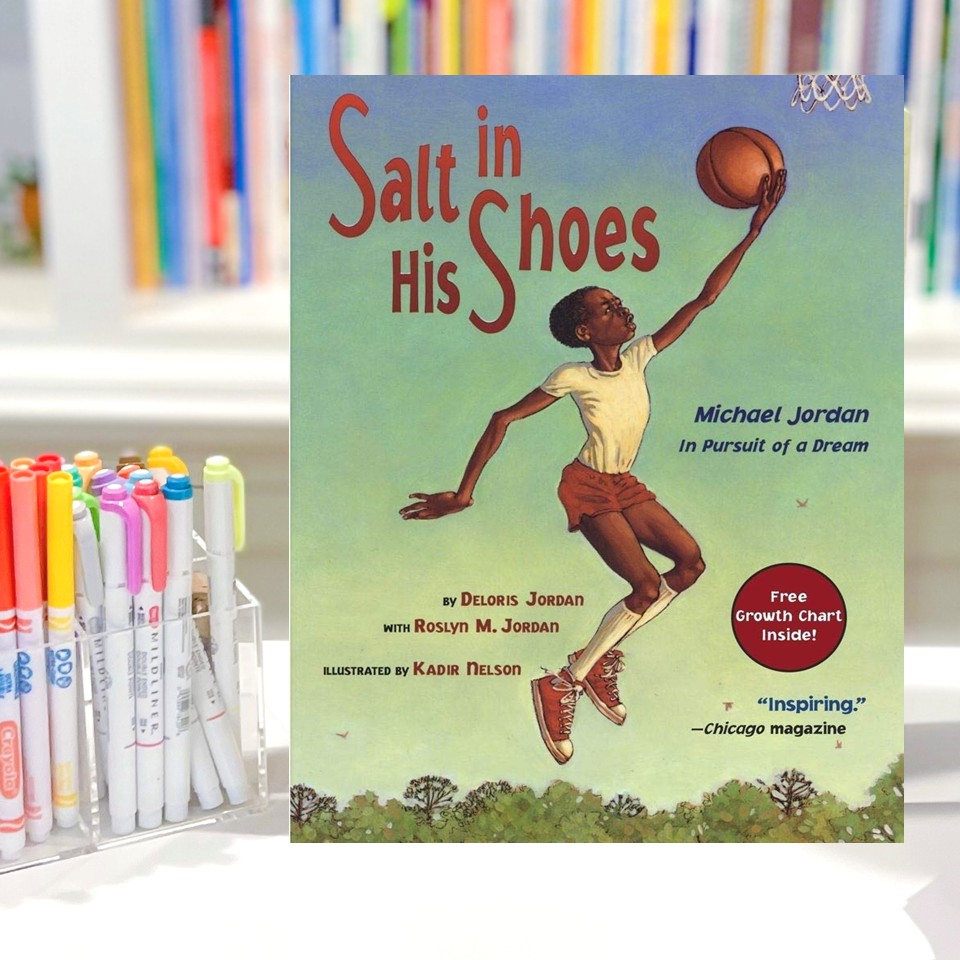
- Salt in His Shoes by Deloris Jordan and Roslyn M. Jordan: Connect a big dream with practice, patience, and encouragement from others.
- Flight School by Lita Judge: Explore how support and a different approach can help someone pursue a goal.
Ready-to-Use Gritty Goals Activities
If you’d like the lesson materials in one place, my Creating SMART Gritty Goals lessons and activities on TPT are designed for grades 3–5. The unit includes goal-hierarchy posters and organizers, a sorting activity with 30 sample goals, brainstorming and planning sheets, a weekly goal tracker, reflection prompts, and a Salt in His Shoes discussion guide.
The listing is titled Goal Setting For The New Year, but you can use the planning and reflection activities when introducing a new classroom goal at other times of year, too.
Start with one meaningful goal and one action your students can practice today. Return to that goal regularly, make room for help and adjustments, and let children see how their everyday choices add up.